BPMN 2.0, not flowcharts: process models that survive an audit
Most teams already draw their processes. The question I'm asked is rarely "should we map?" — it's "why bother with BPMN 2.0 when a flowchart in Visio or PowerPoint does the job?"
The honest answer: a flowchart communicates a process to one person, once. BPMN 2.0 turns that same process into a standardised, governed, reusable asset. In a regulated business, that difference is everything.
What BPMN gives you that a flowchart doesn't
- A shared, unambiguous language. BPMN 2.0 is an ISO standard. A task, a gateway, an event, a message – each means the same thing to everyone: your team, a new joiner, an auditor, a vendor. Freehand flowcharts mean whatever the author had in mind that day.
- Swim-lanes that expose ownership. Pools and lanes show who does what – and, crucially, every handoff between them. Most operational risk hides in those handoffs, and a flowchart usually glosses straight over them.
- Decisions and exceptions, modelled honestly. Gateways force you to capture the "what happens when it goes wrong" paths that flowcharts conveniently skip – exactly the paths a regulator asks about.
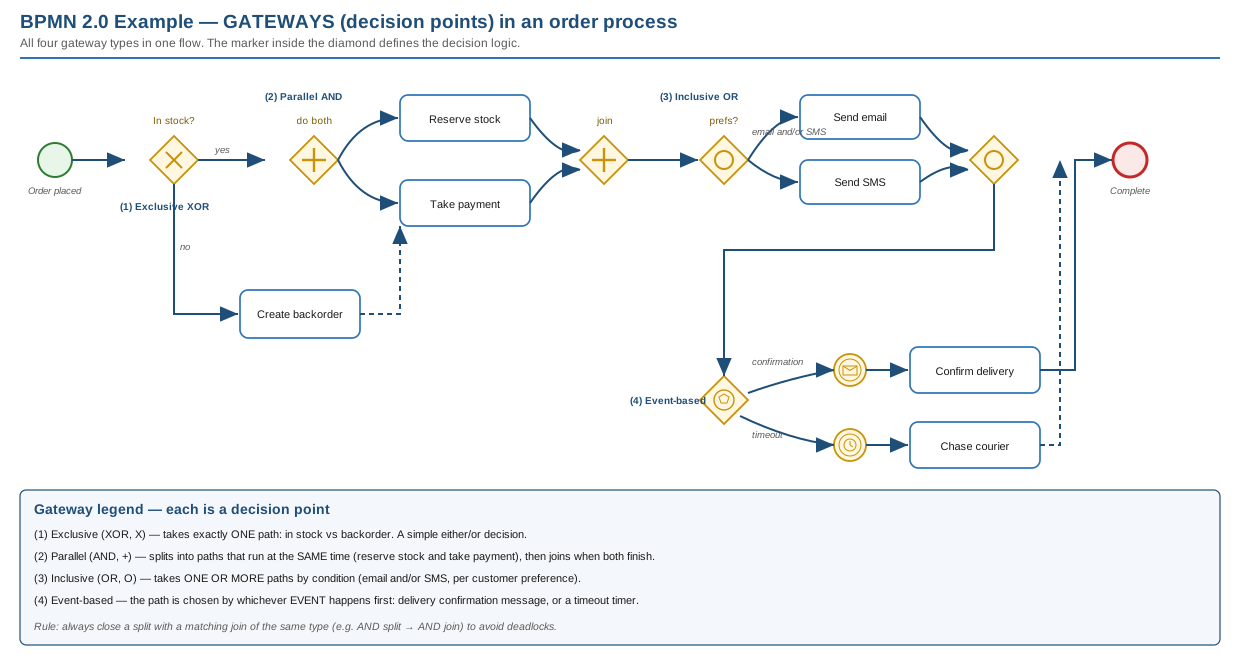
A real BPMN 2.0 fragment – one order process using all four gateway types (exclusive, parallel, inclusive and event-based). Because the notation is standard, anyone can read it: the team, a new joiner, or an auditor.
Why it matters for audit and governance
When everything follows one notation, the process estate becomes demonstrable. You can put a model in front of a reviewer and they can read it without a translation layer. Version it, own it, tie SOPs to specific tasks, and you have an auditable record rather than a pretty diagram that's already out of date.
And why it matters for AI
There's a newer reason, too. A consistent, structured BPMN model is something software – including AI tools – can actually parse. Reasoning about a business is far easier when its processes are written in a standard grammar than as bespoke boxes and arrows. BPMN is, in effect, the difference between a picture of your process and data about your process.
Where flowcharts are still fine
I'm not dogmatic about it. For a back-of-napkin sketch, or explaining a single idea to one stakeholder, a flowchart is quicker and perfectly fine. The trouble starts when that sketch quietly becomes the official record – unversioned, unowned, and contradicting three others.
The bottom line
If a process matters enough to document, it matters enough to standardise. BPMN 2.0 asks for a little more discipline up front and repays it every time someone new has to understand, audit, automate or improve the work. A flowchart is a conversation; BPMN is an asset.